Xander Hansen · 27 October 2026
Polish Teams Track Coiled Protein Shapes to Improve Enzyme Performance in Industrial Biofuel Production
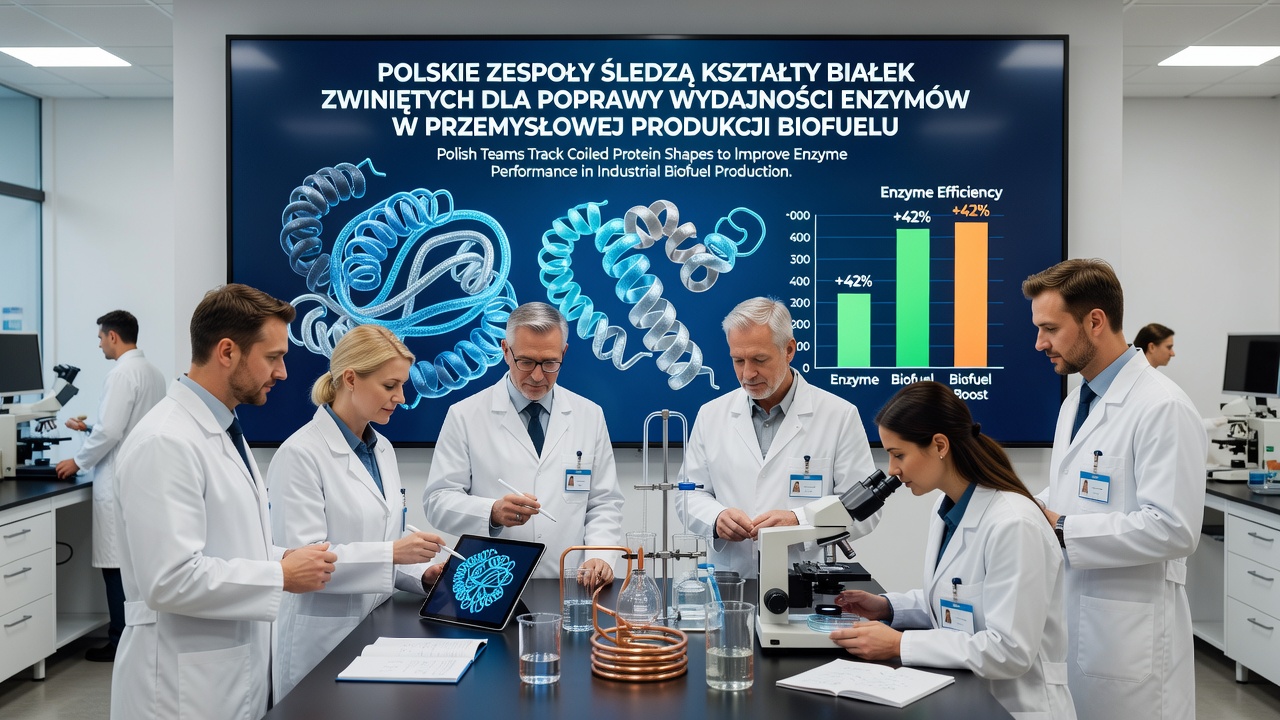
Polish research groups have focused on mapping coiled protein shapes that influence how enzymes fold and function during biomass breakdown for biofuel production, and these efforts rely on computational tracking combined with structural biology techniques to identify key helical arrangements that enhance catalytic efficiency. Teams at institutions across the country coordinate projects that examine alpha-helical bundles and coiled-coil motifs within enzymes such as cellulases and hemicellulases, which convert plant material into fermentable sugars, while data from these studies show that precise control over protein coiling can raise activity levels under industrial conditions that include high temperatures and varying pH values.
Structural Tracking Methods in Use
Researchers apply molecular dynamics simulations alongside cryo-electron microscopy to follow how coiled segments shift during enzyme-substrate interactions, and this combination allows them to predict mutations that stabilize desirable helical formations without disrupting overall protein stability. Laboratories in multiple cities share datasets through national networks, which speeds up validation of new structural models, while algorithms developed locally process large volumes of simulation output to highlight regions where coiling affects active site accessibility. Evidence from published work indicates that adjustments to coiled regions can reduce enzyme degradation rates during prolonged exposure to lignocellulosic feedstocks, and these findings build on earlier protein engineering approaches that targeted surface residues rather than internal helical packing.
Application to Biofuel Enzyme Systems
Industrial biofuel processes depend on enzymes that maintain performance when breaking down tough plant cell walls, yet many natural variants lose efficiency because their coiled domains unwind under stress, so Polish teams test redesigned versions that incorporate reinforced helical interfaces to extend operational lifespan. Data collected from pilot-scale reactors demonstrate that enzymes with optimized coiling patterns achieve higher sugar yields per unit of biomass processed, and this improvement translates directly into lower energy inputs during pretreatment stages. Collaboration with European partners supplies standardized feedstock samples for consistent testing, whereas local facilities provide access to high-throughput screening platforms that evaluate hundreds of variants in parallel.
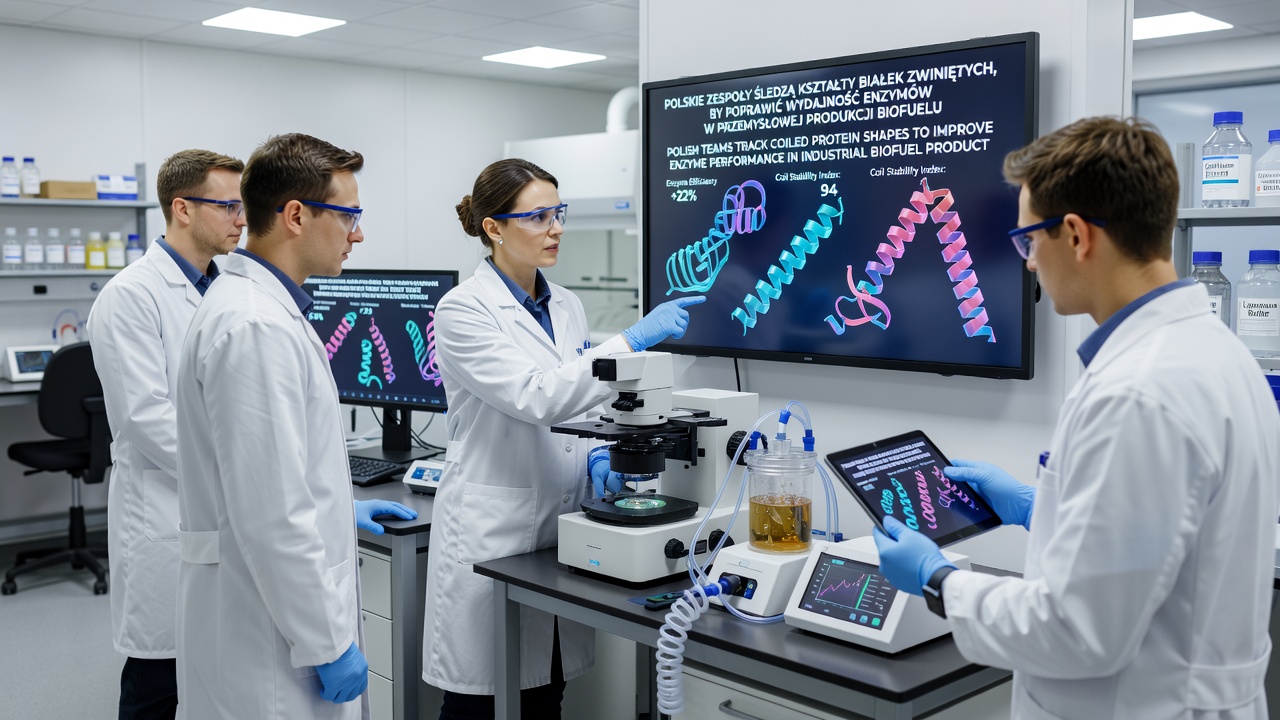
One project completed in October 2026 reported a set of engineered variants that retained over 85 percent of initial activity after 72 hours of continuous operation, and these results came from systematic comparison of wild-type and redesigned coiled segments using both experimental assays and simulation outputs. Such progress aligns with broader efforts to scale second-generation biofuel production across the continent, where reliable enzyme performance remains a limiting factor according to reports from the IEA Bioenergy collaboration.
Integration with Industrial Workflows
Polish teams also investigate how coiled protein shapes interact with accessory proteins that assist substrate binding, and this line of inquiry reveals additional levers for improving overall process economics in large biorefineries. Figures from recent trials show that enzymes featuring stabilized coils require fewer refresh cycles during fermentation, which cuts operational costs and reduces waste streams generated by enzyme replacement. Partnerships with equipment manufacturers ensure that new enzyme formulations integrate smoothly into existing reactor designs, while training programs at Polish universities prepare the next cohort of scientists to continue refining these structural approaches.
Broader Context and Data Trends
Global biofuel output reached approximately 180 billion liters in 2025, yet enzyme-related expenses still account for a significant share of production costs according to analyses from the National Renewable Energy Laboratory, and Polish contributions address this bottleneck through targeted structural interventions. Observers note that the emphasis on coiled domains represents a shift from earlier strategies that focused primarily on catalytic residues, since helical packing now emerges as a controllable variable that influences both stability and specificity. Continued funding from national and EU sources supports expansion of these tracking initiatives, which in turn feed into larger synthetic biology platforms aimed at custom enzyme design.
Conclusion
Polish research on coiled protein shapes provides concrete structural data that supports enzyme improvements for industrial biofuel applications, and ongoing projects continue to generate models that link helical geometry directly to performance metrics. These efforts contribute measurable advances in yield and durability while fitting within established European and international frameworks for bioenergy development.