Xander Hansen · 2 September 2026
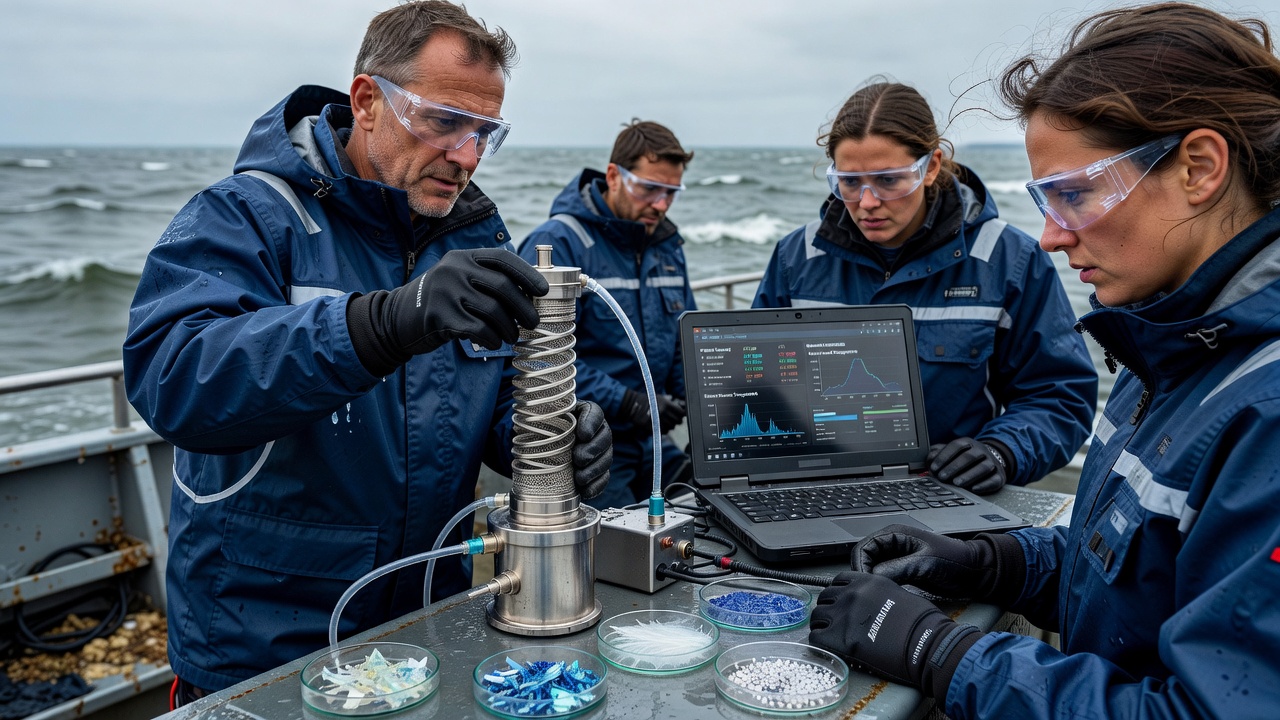
Researchers have developed innovative helix-based sensors capable of detecting microplastics in marine environments. These sensors utilize helical structures to capture and identify plastic particles at a microscopic level, providing new insights into pollution levels in the Baltic Sea. The technology offers a rapid and precise alternative to conventional sampling techniques that often involve time-consuming laboratory analysis.
Technology Behind the Sensors
The helix-based sensors employ advanced nanomaterials arranged in spiral formations. This design allows for high sensitivity and specificity when interacting with microplastic fragments. Scientists from various institutions collaborated to test these sensors in controlled laboratory settings before deploying them in field studies. Each sensor consists of a core helical filament coated with specialized polymers that bind to common plastic types such as polyethylene and polypropylene. Upon binding, the sensors change their electrical properties, which can be measured to quantify the concentration of microplastics present. Initial tests showed detection limits as low as one particle per liter of water, surpassing traditional methods that often require extensive sample processing. The helical geometry enhances surface area for particle interaction while maintaining stability in saline conditions typical of the Baltic Sea.
Survey Results from the Baltic Sea
Field deployments in the Baltic Sea revealed varying concentrations of microplastics across different regions. Coastal areas near industrial zones exhibited higher levels compared to open waters. The data collected helps map pollution hotspots and track seasonal variations influenced by currents and weather patterns. Analysis indicated that the majority of detected particles were fragments from degraded larger plastics, with fibers from synthetic textiles also present in significant amounts. These findings underscore the pervasive nature of plastic pollution even in semi-enclosed seas like the Baltic. Environmental experts suggest that this technology could be integrated into monitoring programs to support policy decisions aimed at reducing plastic waste. Ongoing research focuses on improving sensor durability for long-term underwater use and expanding detection capabilities to other pollutants. Further studies are planned to compare results with satellite imagery and modeling predictions for a comprehensive understanding of microplastic distribution and transport mechanisms.